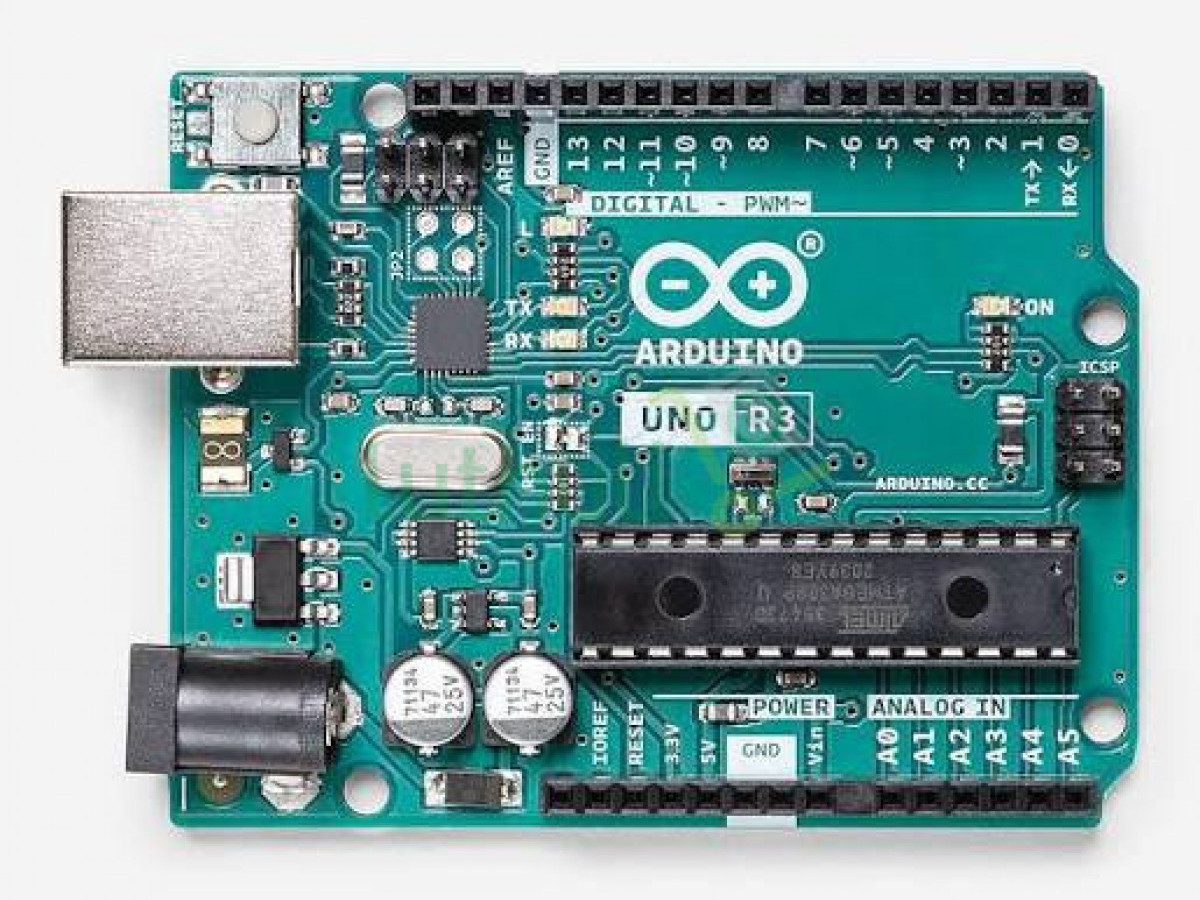
Arduino Uno ATmega328P Development Board
The Arduino Uno is a versatile microcontroller development board designed for learning electronics, programming and building interactive technology projects. Powered by the ATmega328P microcontroller, it provides a practical platform for connecting sensors, LEDs, actuators and other electronic components.
With a range of digital and analog input/output pins, Arduino Uno allows users to build and test different electronic circuits and automated systems. Its accessible development environment makes it suitable for beginners learning programming and electronics as well as experienced makers developing more advanced prototypes.
The board connects to a computer through its USB interface, allowing users to program and upload code conveniently. This makes it useful for experimenting with programming concepts and controlling connected electronic components.
The Arduino Uno in Kenya is suitable for students, teachers, hobbyists, engineers, electronics enthusiasts and makers. It can be used for projects ranging from simple LED blinking exercises to sensor-based systems, robotics, automated devices and home automation prototypes.
Whether you are learning Arduino programming, developing a school or university project, or experimenting with robotics and electronics, the Arduino Uno provides a flexible foundation for hands-on development. It can also be combined with compatible sensors, modules, motors, displays and other components to create customized projects.
Key Features-
Arduino Uno development board
-
ATmega328P microcontroller
-
Digital input/output pins
-
Analog input pins
-
USB computer interface
-
Programmable development platform
-
Supports sensors and actuators
-
Suitable for electronics projects
-
Ideal for robotics and automation
What is Arduino Uno used for?
It is used for programming and controlling electronic components in interactive projects.
What microcontroller does it use?
The Arduino Uno uses the ATmega328P microcontroller.
Can beginners use it?
Yes, it is suitable for learning electronics and programming.
Can it be used for robotics?
Yes, it can be incorporated into compatible robotics projects.